News
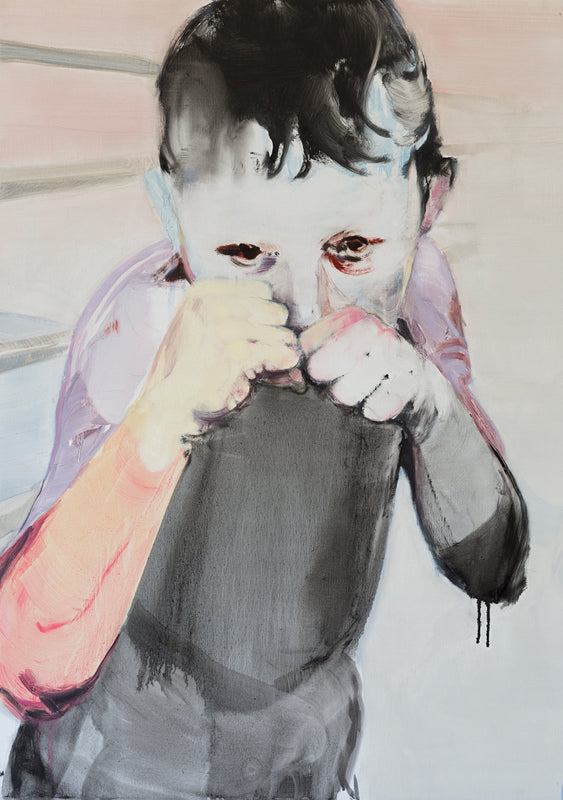
Fiona McMonagle and Justine Varga are now showing in Ways of Seeing at the Art Gallery of South Australia.
“With a primary focus on contemporary works, Ways of Seeing highlights over 100 recent acquisitions to the collection.”
Exhibition runs until April 22 in Galleries 9, 10, and 11 at the Art Gallery of South Australia.

Sera Waters’ Going Round in Squares is now showing at Ararat Gallery TAMA.
The artworks of Going Round in Squares explore ideas around the grids and boundary lines which have governed life in Australia since colonisation. Roads, fence lines, walls, furniture, and even social boundaries reinforce ways of being I have come to call a ‘geometric discipline’. Textile practice especially, performed atop the gridded warp and weft of fabric, is a form of discipline that has historically shaped women’s lives, their education, and opportunities. As women have traditionally been the makers of homes, my artworks re-work textile traditions to explore the disciplining roles of neatness, order, pattern, binding, and containment, all ideas associated with the domestic.
Each artwork of this exhibition carries a narrative grown from evidence left behind by my ancestors who settled (invaded) and made their many homes in South Australia and Victoria from 1838 onwards. They left behind their particular geometric legacies and altered regions irrevocably in the form of clearing land and the importation of non-native species. Undoubtedly their making of homes un-homed others.
…
By re-working domestic materials and traditions, I mine them for knowledge and to break out of restrictive habits, and re-direct these traditions into new trajectories which recognise our ongoing colonising modes in order to shift them for future generations.
Exhibition runs until June 30.
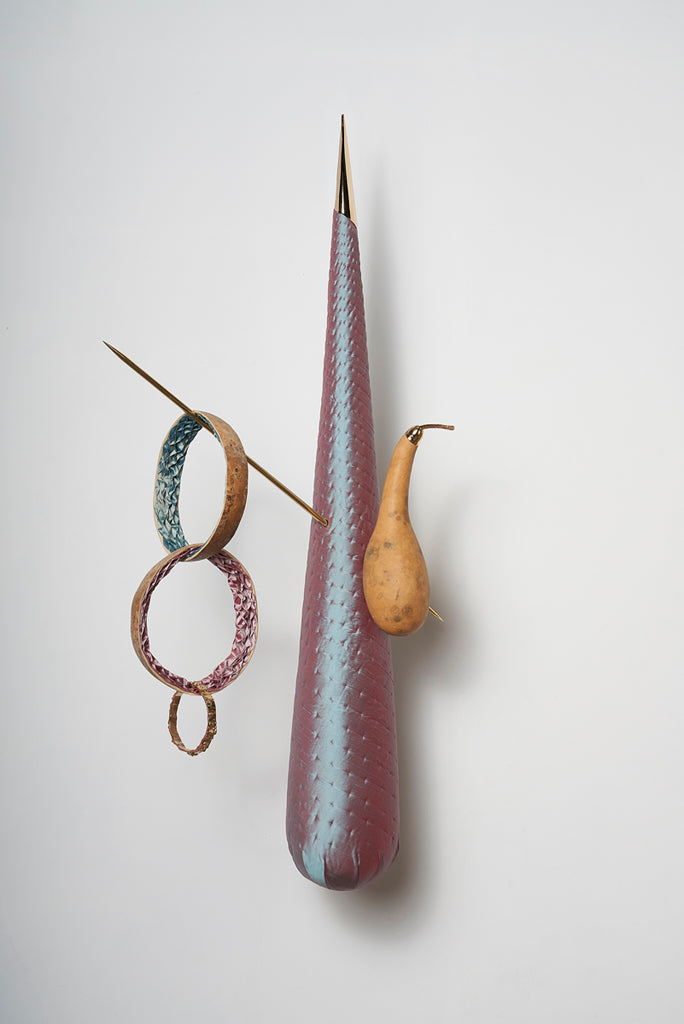
Julia Robinson is now showing in The National 2019: New Australian Art at the Museum of Contemporary Art Australia.
The National is a celebration of contemporary Australian art. The second of three biennial survey exhibitions, it showcases work being made across the country by artists of different generations and cultural backgrounds. Through ambitious new and commissioned projects, the 70 artists featured across three venues respond to the times in which they live, presenting observations that are provocative, political, and poetic. The National is a partnership between the Art Gallery of New South Wales, Carriageworks, and the Museum of Contemporary Art Australia. This year, it has been curated by Isobel Parker Philip (AGNSW), Daniel Mudie Cunningham (Carriageworks), and Clothilde Bullen (MCA), and Anna Davis (MCA). Working in close dialogue, they have developed three distinct presentations of new Australian art that together highlight many of the ideas and concerns motivating artists in Australia today.
Jenna McKenzie has examined the new works in the exhibition:
Cold, dusty skin swells, ballooning outwards from the perfectly round aperture of a gourd. Tongue or tendril, shoot or sprig, a shock of blue-smocked fabric emanates from an amniotic abyss. Coiled and wrapped, clothed and dressed, silks the shade of a tender bruise adorn the fantastical forms of Julia Robinson’s new work. These otherworldly objects emerge from the suspended animation of their wall fittings. An exotic banquet of surfaces is offered to the viewer, ranging from perfectly smooth metals (polished brass, steel, and gold) and intricately smocked, slashed or jack-plated silks, to the raw, untreated surface of the gourds. Together, they mutate, hatch, split and pierce, invoking the transitional state of metamorphosis.
Exploration of transformative states is an intrinsic part of the Adelaide-based artist’s practice. Robinson, who works in the fields of sculpture and installation, has an enduring fascination with sex and death. Drawing on a multitude of sources including myth, superstition, folklore, and calendric celebrations rooted in the changing of the seasons, her work reflects an interest in how humans address existence and mortality through ritual.
…
For The National 2019 Robinson returns to this fertility motif – slicing, dressing, piercing, and gold-plating the gourd, traversing the dichotomies of interior and exterior. She describes this new body of work as “a dialogue with Hieronymus Bosch about ritual, growth and fecundity by way of his remarkable painting The Garden of Earthly Delights (c.1504).”
For Robinson, Bosch’s garden is alive with the processes of fertilisation, germination, and ripening. In his hands, the Garden of Eden becomes a site for metamorphoses, redolent with the mutating, hatching, splitting of the plant world.
Exhibition runs until June 23.

Tony Garifalakis is now showing in The National 2019: New Australian Art at the Art Gallery of New South Wales.
The National is a celebration of contemporary Australian art. The second of three biennial survey exhibitions, it showcases work being made across the country by artists of different generations and cultural backgrounds. Through ambitious new and commissioned projects, the 70 artists featured across three venues respond to the times in which they live, presenting observations that are provocative, political, and poetic. The National is a partnership between the Art Gallery of New South Wales, Carriageworks, and the Museum of Contemporary Art Australia. This year, it has been curated by Isobel Parker Philip (AGNSW), Daniel Mudie Cunningham (Carriageworks), and Clothilde Bullen (MCA), and Anna Davis (MCA). Working in close dialogue, they have developed three distinct presentations of new Australian art that together highlight many of the ideas and concerns motivating artists in Australia today.
Macushla Robinson has examined the new works in the exhibition:
A series of abstract images, float-mounted on corkboard, hang on a timber veneer wall. You wouldn’t know it by looking at them, but they were born out of the pages of POMANTƩO (Romantso), a Greek romance magazine popular in the 1970s. We buy magazines for pleasure and consume them in idle time. We put them in stacks in the corners of our houses. They are not highly prized collectibles and neither are they entirely disposable. These particular magazines were written in the Greek language and read in Australia, and as such they represent both an unattainable fantasy and a comforting, familiar consumable. I imagine someone reading them in a living room panelled with timber veneer, thick carpet you can still smell, a boxy television, and an orange lampshade. The home, like the magazines, would be at once aspirational and comfortable.
Exhibition runs until June 23.

National Anthem, featuring Tony Garifalakis and Paul Yore, and curated by Kate Just, is now showing at Buxton Contemporary.
Presenting a cacophonous array of artistic voices and perspectives, National Anthem brings together 24 artists, from a range of generations, who critically address Australian national identity. Built around key works in the Michael Buxton Collection, together with works sourced from beyond the collection, this project reflects on the ways that the desire for a singular national identity often excludes Indigenous histories and denies the multiplicity of voices, cultures and experiences that enrich, contest, and enhance Australian life.
Channelling humour and satire and engaging in tactics such as play, intervention and confrontation, the artists in National Anthem seek self-determination and collectively hold a mirror up to contemporary Australia, prompting new representations of who we are or who we might aspire to become.
Exhibition runs until July 7.
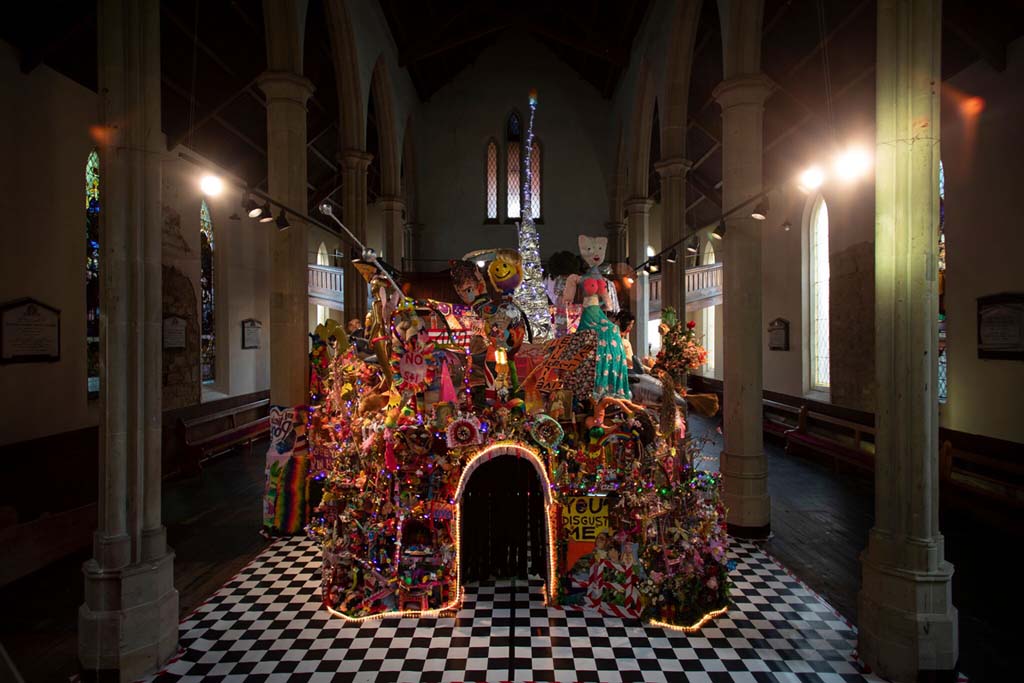
Yore will take over the Black Temple Gallery, DarkLab’s deconsecrated church, with soft sculptural pop-art collages and needlepoint tapestry. Yore will transform the space into It’s All Wrong But It’s Alright, a technicolour chapel in which to worship Dolly Parton, Justin Bieber, and other icons of love, sex, and the excessive.
Dark Mofo 2019 runs from June 6 to 23.
The full program will be announced on Friday April 12.
Presale tickets are available Monday April 15.
General tickets go on sale Tuesday April 16.
For tickets and more information visit Dark Mofo.
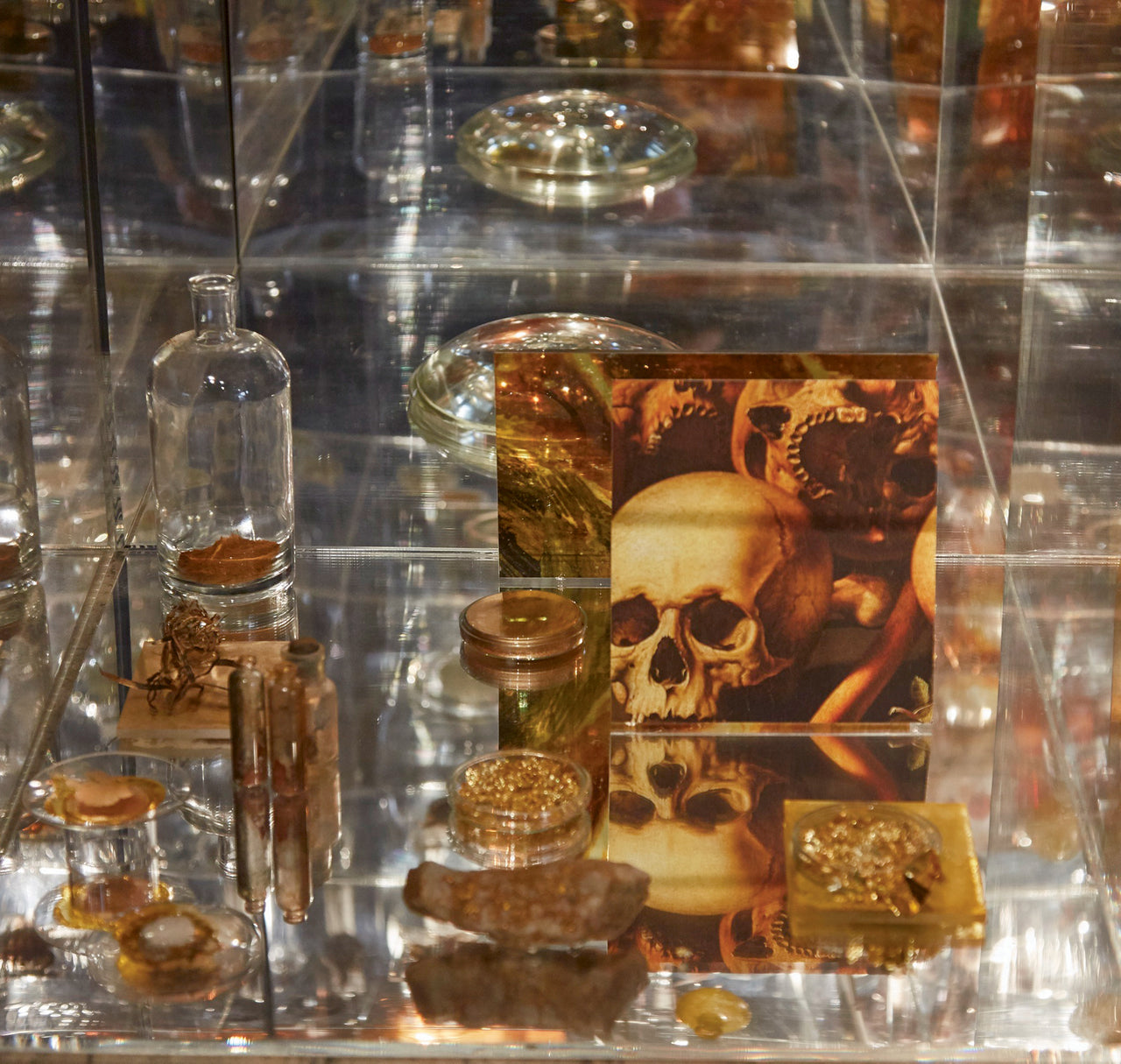
After Nature, the first major survey of Janet Laurence’s career, is now showing at the Museum of Contemporary Art Australia. Presenting work from Laurence’s expansive career, the exhibition will features a range of work from sculpture, installation, photography, and video.
For over 30 years, Laurence has explored the interconnection of all living things – animal, plant, mineral – through a multi-disciplinary approach. She has employed diverse materials to explore the natural world in all its beauty and complexity, and to highlight the environmental challenges it faces today: the era of the Anthropocene.
Janet Laurence: After Nature includes key works from the artist’s career, with loans from public institutions around Australia and the MCA Collection work Cellular Gardens (where breathing begins) (2005). They encompass her alchemical works of the early 1990s that use metal plates, minerals, organic substances and lightboxes, through to her installations of the 2000s and beyond, incorporating plant and animal specimens within transparent vitrines and ‘wunderkammer’ environments. Laurence’s works reflect on the fragility of the natural world, its plight and potential restoration.
Central to the exhibition is a major new MCA commission, entitled Theatre of Trees, which brings together the last decade of Laurence’s research into plants, their medicinal and healing powers, and trees.
This exhibition has evolved from two decades of collaboration between Janet Laurence and MCA Chief Curator Rachel Kent, who curated Laurence’s exhibition Muses at the Ian Potter Museum of Art, the University of Melbourne in 2000.
Janet Laurence
After Nature
1 March – 10 June 2019
MCA: Gallery Level 1
Key Links:
Purchase Catalogue
Read the Curatorial Essay by MCA Chief Curator Rachel Kent
MCA behind-the-scenes short film
Press Coverage:
Talking with Trees event series listed in UNSW Newsroom
Review in The Age
Review in The Australian
Review in Art Guide
Review in Art Almanac
Review in the Sydney Morning Herald

Justine Varga, Julia Robinson, and Kenny Pittock all feature in the current issue of Art Collector magazine.
Kenny Pittock, who first exhibited at the Gallery in 2018, is profiled by Jane Sullivan. Titled Word Play, the piece covers Pittock’s recent exhibitions at MONA FOMA and MARS Gallery, and his upcoming exhibition at Hugo Michell Gallery:
Pittock often lights on objects that are kitsch in the sense that they are valueless or disregarded, but he draws out unexpected lateral associations that give them new meaning.
There’s sincerity in the way he tried to replicate these everyday objects, from the graphic design details of logos to the crumpled packaging, but he’s not interested in hyperrealism. “I grew up watching Wallace and Gromit. I really like seeing things slightly wonky with a thumbprint in them,” he says.
This associative mode of working means a studio packed with small pieces and ideas in development, all waiting for their opportunity. “I’m always working pretty solidly,” Pittock says. Part of what he most enjoys is assembling these individual items into exhibitions and longer narratives. He compares it to the way stand-up performances take their 10-minute sets and draw them together into a longer show with a narrative arc. “I really like the way that comedians are able to tell big jokes while telling little jokes that keep you interested throughout,” he says.
Julia Robinson features in the issue as one of five South Australian artists we need to pay closer attention to, as selected by Liz Nowell:
Her recent work, as seen in Long Ballads at Sydney’s Artspace in 2017 and The National 2019: New Australian Art, features elaborately-adorned gourds. This peculiar, phallic vegetable – that the artist surrounds in Tudor-era ceremonial attire – reflects Robinson’s growing interest in fecundity, growth, and European fertility rituals, some of which are still practiced today. With their overt phallic and seed-spreading references, Robinson’s gourd works draw strong links between nature and sexuality, doing so with a sense of candour, oddity, and playfulness.
Justine Varga’s Areola, which exhibited at the Gallery from February 7 to March 16, is reviewed by Andrew Purvis for One Sentence Reviews:
Amongst exquisitely-framed rectangles of colour, the image of a window repeats, signalling the reintroduction of representational imagery to Justine Varga’s photography; a return that coalesces with the artist’s ongoing investigations into the materiality of the photographic process to stunning effect.
Grab your copy of Art Collector today!

Congratulations to Justine Varga who has been announced as the winner of The Dobell Drawing Prize for 2019. This new biennial prize and exhibition is presented by the National Art School in association with the Sir William Dobell Art Foundation. The Prize is an open call to all artists and aims to explore the enduring importance of drawing and the breadth and dynamism of contemporary approaches to drawing.
Of the work, Justine states: ‘Photogenic Drawing (2018) is an artwork that ruptures any clear distinction between photography and drawing. The negative from which Photogenic Drawing has been derived was drawn on and daubed with pigment during its long exposure. When that negative is printed large-scale in the darkroom, these inscriptions are revealed to intermingle with the distinctive signature of my fingertips, a trace of touching that is generally forbidden in the production of photographs. This mode of working is, in part, due to my grounding in the logic of drawing while I was at art school. But it also recalls similarly drawn photographic prints made in the 19th century by artists like Camille Corot and Charles-Francois Daubigny, and in the 20th by Pablo Picasso and Len Lye. I have always seen my photography in these terms, as a drawing with light, or more literally as a light-sensitive substrate on which I make marks or allow the world to leave its own marks. This print is therefore the making visible of a drawing practice that is at once physical and chemical, autobiographical and contingent, painterly and photographic.’
The Dobell Drawing Prize is now showing at the National Art School and runs until 25 May 2019.
Press Coverage

Hugo Michell Gallery welcomes the addition of Julia Robinson to our represented artists!
Julia Robinson is a South Australian visual artist whose work reflects an interest in religion, the afterlife, death, and how humans address these concerns through ritual. Drawing on established belief systems and a multitude of sources including myths, fairy tales, and European superstition and folklore, Robinson examines our discomfort with sex and with the finality of death. Blurring the boundaries that separate the man-made, the natural, and the spiritualistic, Robinson’s impish sculptures and installations surprise and intrigue. Recent works draw on depictions of harvest, fertility, and resurrection rituals in folk horror films, such as The Wicker Man (1973) and Wake Wood (2011).
Julia has exhibited widely across Australia, and has been the recipient of a number of grants and awards. Upcoming exhibitions include The National 2019: New Australian Art at the Museum of Contemporary Art. Recent exhibitions include: Open House, a touring exhibition and the Tamworth Textile Triennial; Versus Rodin: Bodies across space and time at the Art Gallery of South Australia; Long Ballads at Ideas Platform Artspace; Sensual Nature at the Fremantle Arts Centre; Structure for navigating an unknown afterlife at Art Pod; and Psychache at Holy Rollers Studio. Julia is currently lecturing at Adelaide Central School of Art. Her work is held in the collections of the Art Gallery of South Australia and Artbank, and in private collections across Australia.
Showing: 221-230 of 331